AIsaAIsaStudio 中文 Open AIsa Studio
AI Windvane · Weekly recap

Week 48 AI Weekly

The 20 AI stories that matter most so far this week, drawn from 3 daily issues. The overview follows once the week is over.

In progressNov 23–Nov 2920 stories
Top story

Trump reportedly called into Nvidia board meeting to advocate for Huang's return

President Trump reportedly called into an Nvidia board meeting to push for Jensen Huang's reinstatement as CEO, and the board announced his return shortly afterward, citing input from senior US government levels that Huang poses no national security risk. Huang was ousted after revelations of affairs with an alleged Chinese spy and two Nvidia employees, and he is still expected to testify before three House committees on December 1 and before the Senate Banking Committee at an unscheduled date.

Why it matters

The report aggregates claims from Semafor, CNBC and the New York Times, showing the tension between top-level government intervention in corporate leadership and ongoing congressional hearings.
Industry 3

AINews: Nvidia reinstates Jensen Huang and OpenAI publishes its pretraining curve, joined by Microsoft

Latent Space's AINews digest leads with Nvidia unanimously reinstating Jensen Huang as CEO eleven days after his resignation, citing US government input and ongoing probes, and with OpenAI's Jakub Pachocki publishing five years of base-model log-perplexity data, proposing a shared industry development limit that Microsoft joined by reporting MAI-2 Base at 0.819. The issue also covers Gemini 4 Neon and GPT-6.2 Sol launches, Z.ai's GLM-5.4 loop transformer, and methodological critiques of perplexity-based pacing.

Why it matters

This AINews roundup covers the details of Nvidia reinstating Jensen Huang and the industry debate triggered by OpenAI publishing its pretraining perplexity curve, useful for readers tracking both storylines.

Nvidia CEO Jensen Huang is back. What happens next?

Jensen Huang returned as Nvidia CEO on November 23rd, less than two weeks after resigning over affair and spying scandals, with the board citing input "from senior levels of the United States government." Nvidia CFO Colette Kress had been named interim CEO after his resignation. The liveblog tracks related developments, including reported SEC interest in Nvidia's accounting practices, a California attorney general subpoena, a December 1st congressional testimony, and Nvidia ceasing AI chip sales to China.

Why it matters

The article lays out the full arc of Jensen Huang's resignation and return, including government involvement and regulatory probes, giving readers a complete picture of the fallout.

States sue SpaceX to stop Grok from generating child sex images, revenge porn

Virginia and Oregon on Monday became the first states to sue SpaceX over Grok's continued generation of non-consensual intimate imagery and child sexual abuse material. The attorneys general allege SpaceX's earlier statements about added safeguards were misleading, claiming the company quietly embraced sexualized content to gain AI market share.

Why it matters

The lawsuit alleges SpaceX has failed to stop Grok from generating NCII and CSAM even after acquiring xAI, offering a useful reference point on AI product safety regulation.

Voices 2

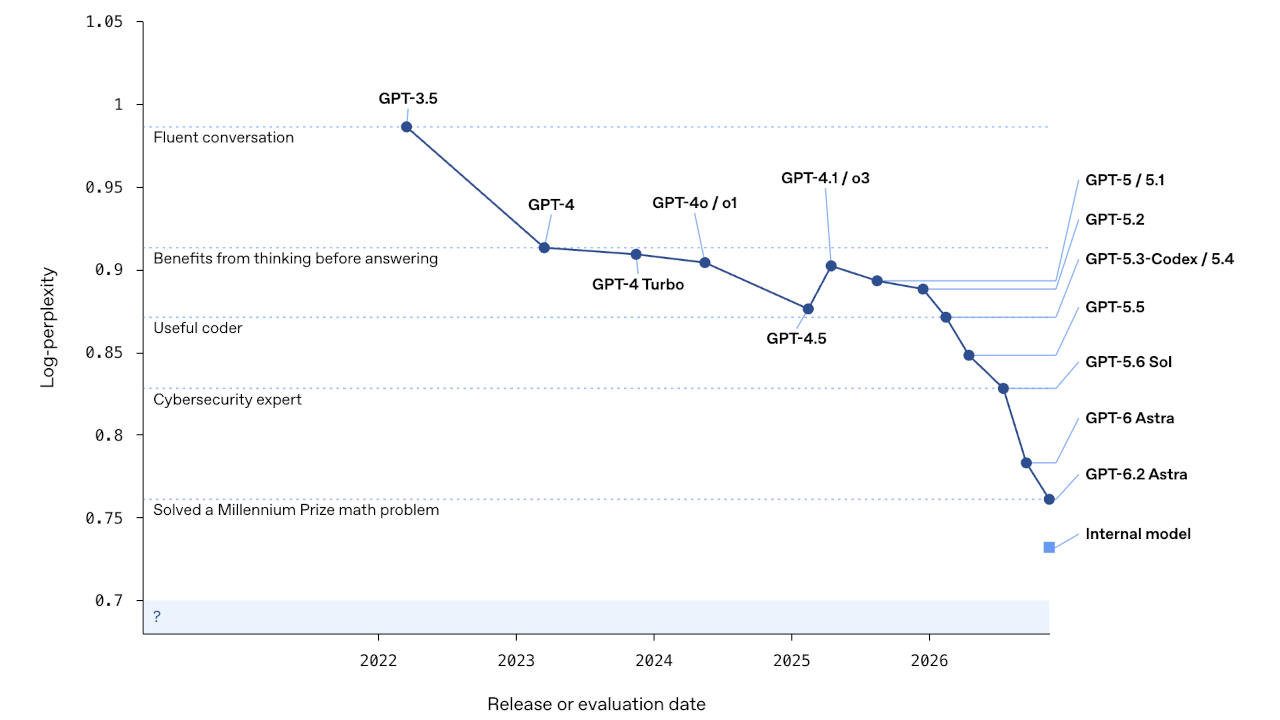
OpenAI proposes perplexity as a shared industry metric and releases its internal pretraining data

OpenAI argues for establishing perplexity (cross-entropy loss) as an industry-wide metric to compare model developers and inform shared safety standards, and publishes internal pretraining perplexity measurements from GPT-3.5 onward. The post links key capability jumps to log-perplexity thresholds (~0.99 for GPT-3.5, ~0.91 for GPT-4, below 0.8 for emerging cybersecurity and math capabilities), anticipates transformative capabilities in the ~0.68-0.7 window, and proposes industry limits on development tied to perplexity until monitoring abilities reach concrete milestones, while acknowledging challenges including cross-lab comparability and the fact that chain-of-thought reasoning does not reduce perplexity.

Why it matters

OpenAI publishes its internal pretraining perplexity numbers and argues for perplexity as a shared cross-lab safety standard, while also laying out the metric's four main limitations.

Also: Reddit · r/OpenAI

covered 2 days

How Notable Capital, GIC, and Baillie Gifford bet big on Anthropic before its IPO

Anthropic raised $81.3 billion in the largest IPO in history at a fully diluted valuation of about $1.5 trillion. TechCrunch recounts how Notable Capital put roughly 10% of the U.S. portion of its $1 billion-plus fund into Anthropic's Series E at a $61.5 billion valuation after finding developers favored Claude over ChatGPT 70% of the time, a paper return of about 15x; GIC invested over $4.5 billion across three rounds for a stake near 1% post-IPO, and Baillie Gifford put in $1.5 billion across three rounds.

Why it matters

First-hand investor interviews explain how Notable, GIC and Baillie Gifford justified early bets on Anthropic through developer preference and closed-source conviction.

Trends 2

Security researchers show how cheap AI inference providers steal keys and snoop on users

Dragos security researchers sent about 2 million AI requests with fake credentials between July and November 2026, finding at least three compromised inference providers where attackers actively stole AWS keys, probed S3 storage, and established persistence. Marketplace resellers also read customer requests simply by enabling logging, and even providers with Zero Data Retention policies accessed secret test URLs. OpenRouter removed three providers and revoked ZDR approval for 125 endpoints, warning users that third parties may have read requests sent to MiniMax models. Dragos recommends controlling routing, checking privacy settings, and planting canary tokens.

Why it matters

Dragos's live testing shows concrete paths for key theft and ignored privacy promises by intermediaries, helping readers rethink AI request routing and credential hygiene.

OpenRouter users spent more on Google models than OpenAI last week

OpenRouter reports that its users spent more on Google models than OpenAI models last week. Multiple well-received launches, including Gemini 4 Neon and Carbon, pushed Google past the 50% mark.

Why it matters

OpenRouter's own spending data shows the Google vs OpenAI share shift and which launches drove it, a useful window into model usage patterns.

Research 3

GPT-6 models show intrinsic protein-design capabilities in OpenAI preprint and lab tests

OpenAI reports that its GPT-6 family can design protein structures and sequences using only reasoning and code, without relying on specialized biology models for design generation. In lab tests with Onava, 35 of 322 minibinders based on GPT-6.2 designs showed binding across five targets (PD-L1, IL-7Rα, TrkA, VEGF-A, IL-17A), redesigned antibodies retained binding (70% of 182 VHH loop designs and 66% of 272 therapeutic antibody fragments), and the models matched or beat specialized models like RFdiffusion and DiffDock-L on docking and ranking tasks. An accompanying preprint details these results, though the authors note complete protein-structure prediction remains a clear weakness and candidate filtering still relied on specialized models such as ESMFold2.

Why it matters

The post provides lab and benchmark numbers alongside comparisons with specialized models, letting readers gauge where general models actually stand in protein design.

GPT-6 Cyber helped validate 948 local root Linux kernel bugs in one run, says OpenAI

OpenAI reports that in one run, GPT-6 Cyber helped validate 948 Linux kernel bugs that could grant local root access and generate patches for review. Researchers Clint Gibler and Kyler Middleton detail the findings and how they worked with maintainers to get fixes upstream.

Why it matters

OpenAI's own research team shares the validation workflow and how fixes were landed upstream with kernel maintainers, offering a concrete look at using such models in real security research.

Google DeepMind uses Gemini 4 agent teams and Lean verification to speed up quantum algorithms

Google DeepMind and Google Quantum AI used teams of Gemini 4 agents, with results proven in the Lean formal theorem prover, to improve well-known quantum algorithms. Reported gains include an 11.8x cost cut for inertial confinement fusion calculations (memory down from 5,650 to 4,338 error-corrected qubits), 8x cheaper simulation of a common light-sensitive molecule, a 2.5x improvement for Cytochrome P450, a 2.57x speedup for a Grover's algorithm implementation, and a 290x speedup for arcsin. The team is open-sourcing their Lean library, problem specifications, and verified solutions on GitHub.

Why it matters

The post details concrete speedups and an open-source Lean library, showing how agent teams with formal verification can improve quantum algorithm design.

Open source 2

EL4CTEO open-sources fast-anything: port only the slow 5% of your app to Rust with a coding agent

EL4CTEO released the open-source fast-anything, which profiles Python, Node, Ruby and other language apps, has a coding agent port only the slow functions to Rust, and verifies the ports against recorded and derived edge cases before swapping them in. Verified examples on the README show speedups such as 116x for a Python fuzzy dedupe and 20x for TypeScript; it supports Claude Code plugins, MCP servers and skills, is MIT licensed, and gained about 1,259 stars within one day.

Why it matters

The tool validates Rust ports against real recorded calls instead of full rewrites, letting readers assess whether to slot it into their own performance-optimization workflow.

Anthropic puts 91 official Claude notebooks on GitHub, covering agents, RAG, vision and more

Anthropic has placed 91 official Claude example notebooks on GitHub, a repo the author says has over 55k stars. The notebooks cover tool use, agents, RAG, vision, Skills, cost optimization, evals, and production deployment, and the author links them with numbered descriptions.

Why it matters

The post curates Anthropic's 91 official Claude notebooks into a themed list, making it easy to find examples on tool use, agents, RAG and more.

Product updates 6

Anthropic launches Claude Ship (beta) for PR review, fixes, and approvals

Anthropic's Claude Devs team introduced Claude Ship (beta), which can review pull requests, work on fixes, and approve the ones the team's policy allows, aiming to help ship code as fast as you can write it.

Why it matters

The official post spells out Claude Ship's positioning on PR review, fixes, and policy-based approvals, letting readers assess how it might change their code workflow.

Claude artifacts can now be installed as desktop apps on Mac and Windows

Claude artifacts can now be installed as desktop apps on Mac and Windows. Users ask Claude to build an artifact, click Install as app, and open it like any other app; it can use connectors and, with permission, send notifications or add a menu bar item.

Why it matters

The post explains how to install Claude artifacts as desktop apps and what permissions they can use, helping readers judge whether to adopt it in daily workflows.

Anthropic releases canvas-design, a skill for better AI-generated posters

Anthropic has released canvas-design, a poster-creation skill. Before generating, it first defines the design concept in text, then builds shapes, colors, and typography, producing distinct posters for different use cases. It has about 19.8万 GitHub stars and ~13.7万 installs, installed via the npx skills add command.

Why it matters

The post includes the install command and workflow for canvas-design, so readers can directly use it to improve AI-generated poster layouts.

OpenAI and Cisco launch Shirudo, an open-source eBPF runtime for protecting Linux systems during patching

OpenAI and Cisco launched Shirudo, an open-source Linux runtime that uses eBPF to deploy temporary "shields" blocking exploit behavior while allowing legitimate requests, without restarting services. In a controlled test, a Codex-generated shield blocked a Java4Shell exploit against a running Elasticsearch service. The project is BSD 2-Clause licensed (BPF programs dual BSD/GPL), with cryptographic signing, eBPF verifier checks, and TPM-backed verification, and contributions are welcome on GitHub.

Why it matters

The post includes a working test where an eBPF shield blocked a Java4Shell exploit against running Elasticsearch without a restart, offering security teams a concrete model for patch-window protection.

Claude turns connectors and skills into plugins, with 10,000+ to browse

Claude unifies connectors and skills into plugins, giving users a single way to connect tools or teach Claude new skills. Plugins are live on Free, Pro, Max, and Ultra plans, with Team and Enterprise coming soon, and 10,000+ plugins are browsable at the shared directory link.

Why it matters

The post explains how Claude's connectors and skills merge into plugins and who can use them now, helping readers decide whether to migrate existing setups.

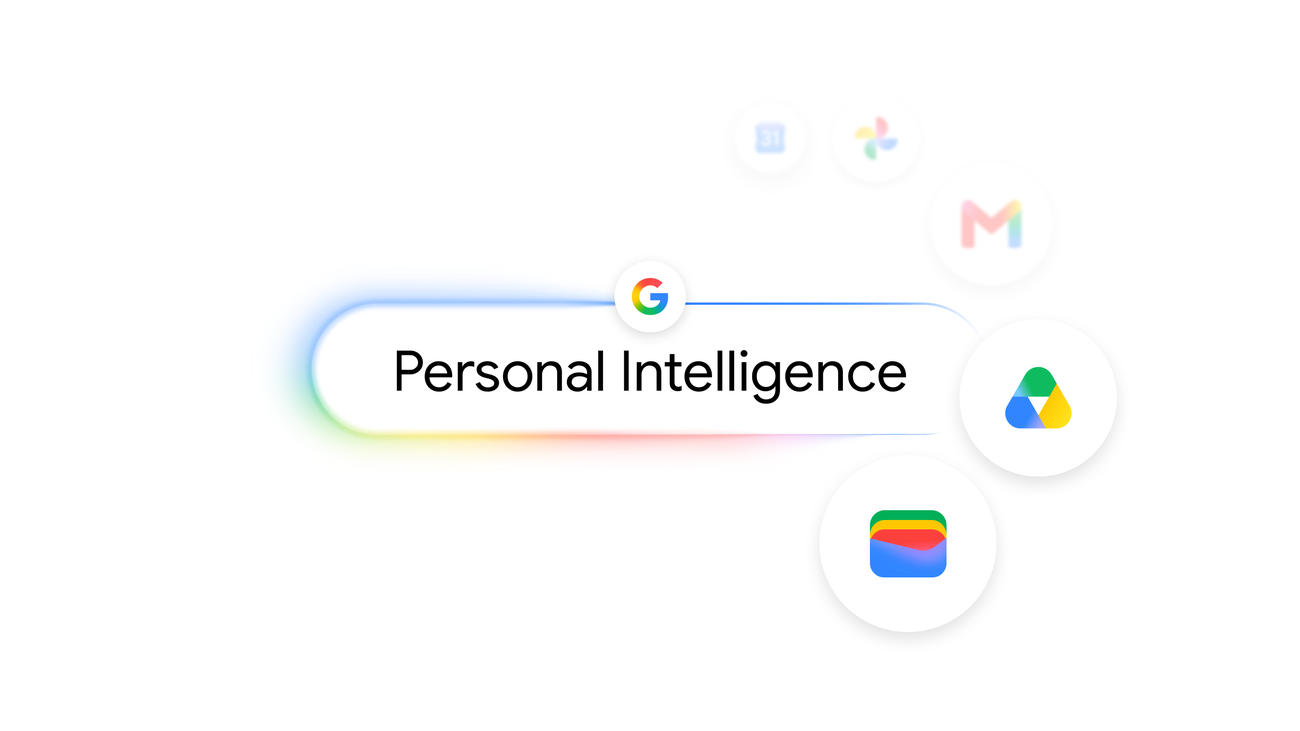
Google Search adds Wallet, Drive, and Gemini app connections to Personal Intelligence in AI Mode

Google Search's AI Mode now lets users opt in to connect Google Wallet, Drive, and the Gemini app to Personal Intelligence, adding spending, documents, and chat context to search responses. Wallet support rolls out today with Drive and Gemini following in coming weeks; AI Mode can only read Wallet account information and cannot move, manage, or invest money, and all connections can be toggled off anytime.

Why it matters

Google officially details which apps can now connect, plus limits like AI Mode only reading Wallet data, helping readers weigh the privacy and usefulness of personalized search.

Tutorials & practice 1

How to build and maintain an agentic evaluation

Hugging Face published a guide on building and maintaining agentic evaluations, tracing the evolution from question-answer to agentic and multi-agent benchmarks. It walks through eight steps adapting Terminal-Bench's raman-fitting task into raman-lab, where a shortcut bypassed the required fitting and forced verifier fixes, and it provides a component-by-component table on what to open source versus keep protected. The guide also cites Terminal-Bench 2.1 fixing 28 of 89 tasks after user reports and OpenAI estimating about 30% of SWE-bench Pro tasks were broken.

Why it matters

The authors built and released a working agentic evaluation example, showing how each component can be reused, validated, and published for review.