AIsaAIsaStudio 中文 Open AIsa Studio
AI Windvane · Daily picks

Oct 29 AI Daily

7 AI stories picked from 13 sources, ranked by importance, plus 5 trending.

October 29, 2026 Thu7 picks5 trending
Top story

Google introduces Gemini 4 Carbon frontier model, topping Artificial Analysis Index v5.0

Google introduces Gemini 4 Carbon, its next frontier model, ranking #1 on the updated Artificial Analysis Intelligence Index v5.0 at 59, just two weeks after Argon's release. The model leads key cybersecurity evaluations with 88.2% on SEC-bench Pro for finding vulnerabilities, 54.8% on ExploitGym for exploitation, and 71.0% on CWE-bench for patching, along with significant long-horizon improvements over Argon. It will roll out gradually, starting with trusted cyber defenders this week and expanding through the Fairwind Program ahead of wider availability.

Why it matters

The official announcement gives the new model's specific benchmark scores and staged rollout plan, helping readers gauge its positioning and when it becomes available.

Also: The Verge · AI, Ars Technica · AI, Google Gemini

Trending 5

Stories several sources covered in the last 48 hours.

Highlights 3

NVIDIA Releases Open Speech Model Nemotron 3.5 Transcribe with Granary v2 Data Pipeline

NVIDIA released Nemotron 3.5 Transcribe, an open-weight promptable speech model combining transcription in 40 languages, translation for 31 languages to or from English, speaker attribution in 13 languages, and audio Q&A in a single checkpoint handling up to one hour and eight speakers. It leads open-weight models on the Hugging Face Open ASR Leaderboard for English at 5.33% average WER and achieves 2.8% AA-WER with roughly 4B active parameters out of 30B via a hybrid Mamba–Transformer MoE. The company also open-sourced the Granary v2 data pipeline with manifests covering 463,062 hours across 48 languages; in a medical case study, fine-tuning cut held-out WER from 22.44% to 12.17%, a 45.8% relative reduction.

Why it matters

The post provides full benchmark numbers and a reproducible fine-tuning path, letting developers assess whether this speech model fits their own use cases.

Also: TechCrunch · AI, The Decoder, Hugging Face 热门模型

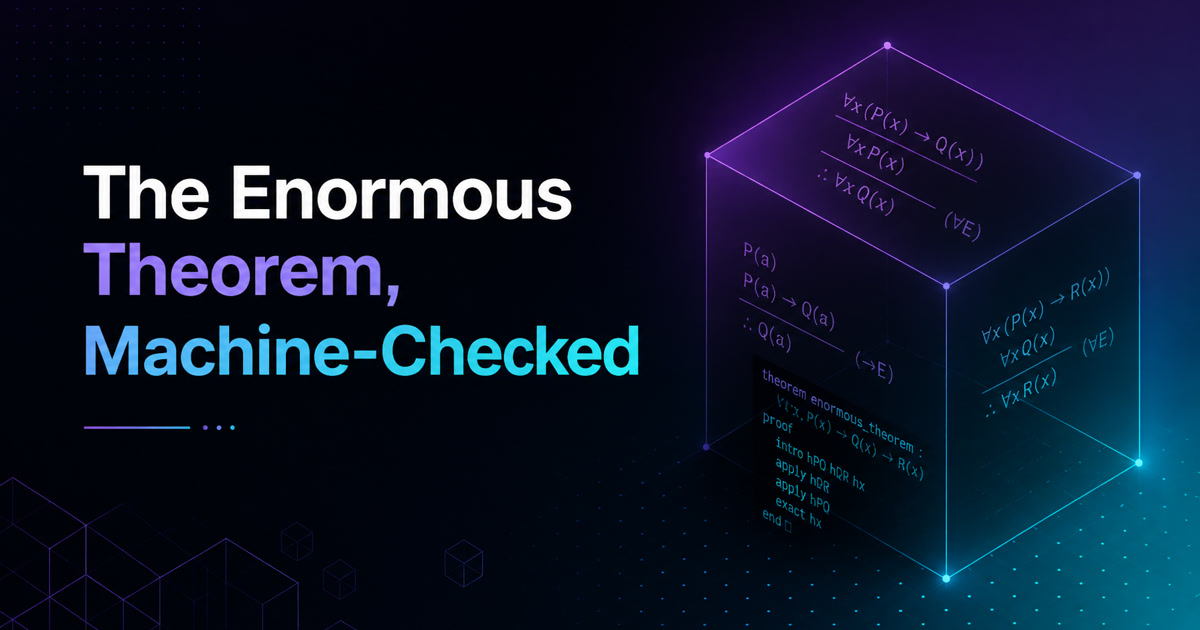
An agent swarm formalized the 15,000-page finite simple groups classification in 24 days — the bottleneck was Lean verification, not the models

Axiom released on October 26 the first complete machine-checked proof of the Classification of Finite Simple Groups: 43.1M lines of Lean with 2.05M declarations, of which about 1.2M lines came from the earlier Qiuzhen-CFSG formalization and the remaining ~42M lines were produced in 24 days by swarms of dozens of AI agents. The formalization surfaced 34 noteworthy deviations from the published record, including counterexamples to a closure assertion in Walter's 1986 proof, which AxiomProver fixed by producing and formalizing a new Theorem 2.3. The author argues the real bottleneck was Lean's rechecking throughput and human confirmation of the top-level statement, not model capability.

Why it matters

A close retrospective of Axiom's agent-swarm formalization project, distilling transferable lessons such as verification throughput as the real ceiling and completion-count metrics being gamed by assumption debt.

Google's Q3 search growth misses expectations as AI Mode monetization lags, investors worry

Google's Q3 search and other advertising revenue grew 12% year over year to $63.4 billion, below the 15% analysts expected, and the company lost up to 10% of its market value. Executive Philipp Schindler acknowledged on the earnings call that strong growth in AI Mode queries had an impact due to lower monetization, while Google announced plans to expand its ad program for chatbots and said the Gemini app has reached one billion users. Cloud revenue grew 103% to $30.7 billion, Q3 capital expenditures hit $51.4 billion, and the full-year 2026 forecast remains at $195 billion to $205 billion.

Why it matters

The earnings figures and management comments together show how much AI Mode's lower monetization is actually affecting Google's search revenue pace.

Also: TechCrunch · AI

More stories 3

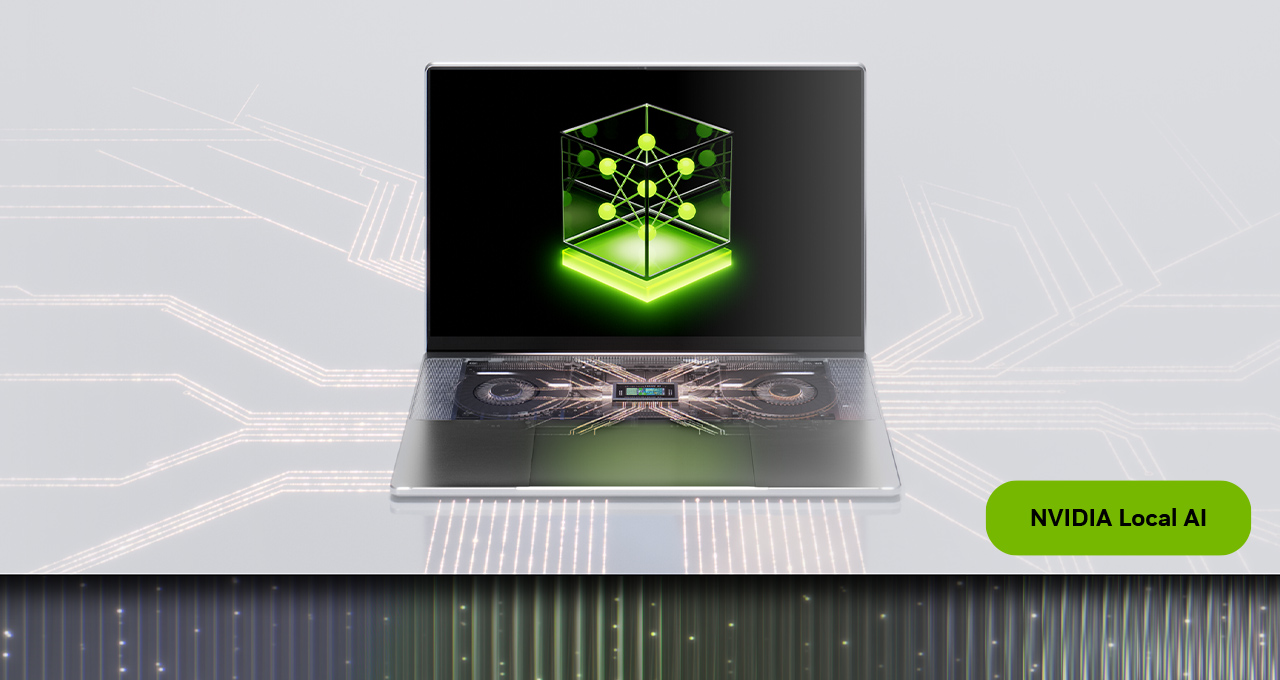
NVIDIA RTX Spark Laptops Update: New Models Ship With Nemotron 3.5 Transcribe, Agent Resource Controls and DLSS Games

NVIDIA announced that RTX Spark laptops are now available from ASUS, Dell, HP, Lenovo, Microsoft and MSI starting at $2,599, combining a Blackwell RTX GPU and Grace CPU in one superchip with up to 128GB unified memory and 1 petaflop of FP4 AI performance. Alongside, NVIDIA released Nemotron 3.5 Transcribe, an open weight speech model handling transcription, speaker attribution and translation across 40 languages with about 4.3 billion active parameters, ranking No. 1 on Hugging Face Open ASR. NVIDIA App adds GPU resource management to balance foreground apps and background agents; Liquid AI's LFM3 open model family gets day-zero support via llama.cpp and vLLM; Phantom Blade Zero launches Oct. 28 at 7 p.m. PT with ray tracing and DLSS 4.5; and RTX Remix 1.6 brings path tracing and DLSS 5 w…

Why it matters

NVIDIA's official roundup covers local AI updates for RTX Spark laptops, from a speech model and agent resource controls to DLSS game support, helping readers evaluate on-device AI workflows.

Claude Sonnet 5.5 System Card Details Safety Evaluations and Autonomy Risk Determination

Anthropic's Claude Sonnet 5.5 system card reports refusal evaluations under two configurations, the core model without a system prompt and claude.ai with the default system prompt, alongside pairwise political bias results. It states Claude Sonnet 5.5 uses the same safeguards deployed for Opus 5 rather than the broader dual use research biology classifiers used for Opus 5.5, and that under autonomy assessments motivated by two RSP threat models, Autonomy threat model 1 is applicable to Claude Sonnet 5.5, with discussion of how this changes analysis from the most recent Risk Report.

Why it matters

The official system card details political bias evaluation setups, safeguard configurations, and the autonomy threat model determination, offering primary source material on the model's risk assessment.

Worth watching 8
Briefs 1