AIsaAIsaStudio 中文 Open AIsa Studio
AI Windvane · Daily picks

Nov 10 AI Daily

3 AI stories picked from 11 sources, ranked by importance, plus 5 trending.

November 10, 2026 Tue3 picks5 trending
Top story

Claude Fable 5.2 and Claude Mythos 5.2 now available on Amazon Bedrock

AWS announces that Anthropic's Claude Fable 5.2 and Claude Mythos 5.2 are now available on Amazon Bedrock and Claude Platform on AWS. Fable 5.2 targets complex coding, math, and science work and can run unattended for hours to days; Mythos 5.2 covers cybersecurity and life sciences via Anthropic's verification programs. Fable 5.2 is designated a Covered Model, requiring by default up to 30 days data retention and human safety review via the aws_review mode, or zero data retention through Enterprise Frontier Safeguards until June 30, 2027. The post also covers migrating with the claude-api skill in Claude Code and invoking the model via Boto3, AWS CLI, and SDKs.

Why it matters

This official AWS launch post details model positioning, data retention and EFS options, and Bedrock invocation and migration paths, helping readers assess integration cost for technical workloads.

Also: The Verge · AI, TechCrunch · AI, The Decoder

Trending 5

Stories several sources covered in the last 48 hours.

Highlights 2

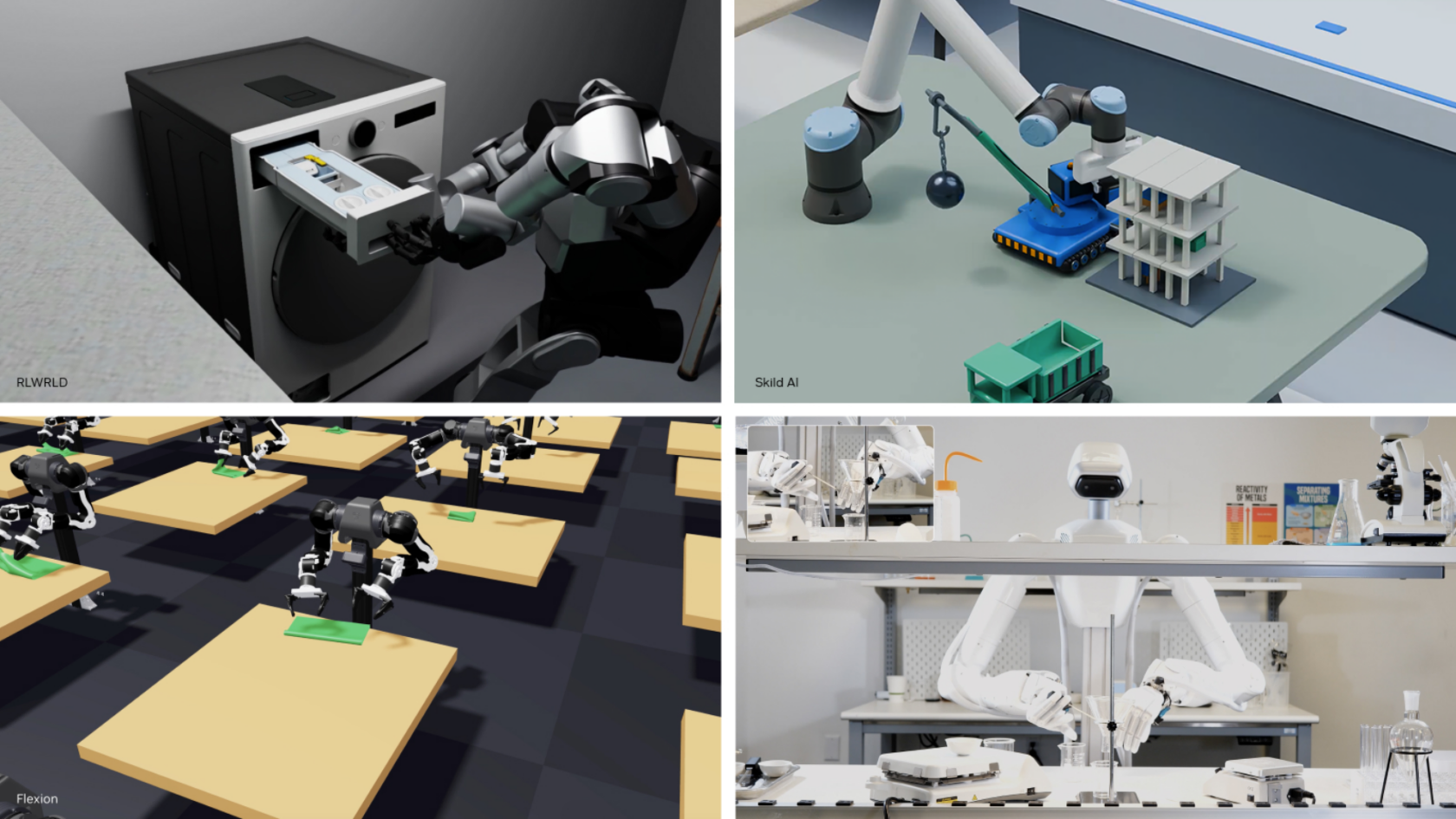
NVIDIA unveils GR00T 2 world action model and Isaac Lab 3.0 among open robotics technologies at CoRL

NVIDIA introduced GR00T 2, an open frontier world action model built on Cosmos, trained with 100,000 hours of open source human egocentric data; it completed 40 of 50 evaluated tasks out of the box and reached 71% average success with one demonstration per task, rising to 95% with five. Alongside it, NVIDIA released Isaac Lab 3.0 with deeper Newton physics engine integration achieving up to 2.5x the training throughput of Isaac Lab 2.3 with PhysX, plus new DexBench and VABAR benchmarks, Isaac Lab-Arena 0.4 developer preview, a Video to Data workflow, the EgoHand model, and UC Berkeley's Graph-as-Policy agentic framework. Two NVIDIA papers, GRAIL and RoboTTT, are among six finalists for CoRL Best Paper Awards, with Foxconn, Siemens and Nexuni among partners testing the technologies.

Why it matters

The article lays out NVIDIA's CoRL announcements of world action models, simulation frameworks and new benchmarks, giving readers a view of the latest toolchain for robot manipulation training.

Worth watching 8

Everything we know so far about the Nvidia spy scandal targeting CEO Jensen Huang

Nvidia CEO Jensen Huang has acknowledged an affair with Megaspeed exec Alice Huang, prompting a company investigation. Recent reporting says US intelligence had identified Alice Huang (no relation) since last year as a spy for China's Ministry of State Security whose AI compute company rents access to Nvidia GPUs. Nvidia and Jensen Huang say they have no reason to believe national security or Nvidia secrets were compromised, and the investigation continues.

Running coding agents in parallel works better when each one owns specific files

A developer shares a workflow for running coding agents in parallel: split the job and give each agent a list of files it can edit and a list it can't touch, so no files are shared and there is nothing to merge. Agents only need to get their part compiling, and the author runs build and tests once after all finish, instead of letting each agent run the full suite and waste tokens re-reading the same files; build failures go to a small fix agent with the exact error. The author also recommends pinning the model and effort for every agent to avoid silently landing on the most expensive model at max effort.

Open-source rea-video reverse-engineers any video shot by shot into filmed, AI-generated or coded, with a remake plan

JuneYaooo open-sourced rea-video, which reverse-engineers videos shot by shot to judge whether each was filmed, AI-generated or coded, then outputs a remake plan. The repo reached 5470 stars in 11 days and runs inside Claude Code, Codex or any command-capable agent, requiring ffmpeg and Python 3.10+. Output includes a one-line summary, a remake plan split into what to film, generate and code, and a full report.html with per-shot frames, prompts, lighting and audio breakdowns; hooking up a vision model like Gemini or Doubao improves accuracy and adds a reverse-engineered prompt per shot.

How to mess around with neurons: a short neuron-steering guide for Qwen3.5-4B

The author shares a method for single-neuron activation steering on Qwen3.5-4B (32 layers, 9,216 neurons each): add a hook on the down_proj of a chosen layer that pushes one neuron by a fixed dose (0.75 to 1 works well; above 1-1.5 usually produces gibberish), savable as a control vector for llama.cpp via --control-vector. The guide covers three ways to find interesting neurons — random search in middle layers, gradient shortlisting with an LLM judge, and activation mining for topic detectors — plus advice to verify by pushing 3-5 other neurons in the same layer as controls. The approach is inspired by justinrhowell's neuron-steering repo, and neurons can also be looked up on Neuronpedia.

LASIK released open source: undoes BLA hardening so AI coding agents can read code again

Reddit user u/morphh7 released LASIK (LLM Agents Sight In Kode), an open-source tool that counters BLA, a tool that fills code with gibberish and obfuscation to deter AI agents. LASIK reads hardened builds without running them, removes only what it can prove is protection, and writes a clean copy for agents like Claude Code and Codex; unhardened code comes back byte for byte unchanged. Across BLA's public crackmes it cuts token usage from about 21M to 17k, covers 21 formats including JS bundles, WebAssembly, Electron apps, Python, Android APKs and model files, and is MIT-licensed via npx lasik-agents or as an MCP server.

Claude Code settings files expose thousands of secrets on GitHub

Researchers at Apiiro found thousands of secrets, including database passwords, API tokens, and root logins, in Claude Code settings files embedded in public GitHub repositories. The leak stems from the "Yes, and don't ask again" approval option, which stores commands as-is in the local .claude/settings.local.json file; Anthropic's documentation notes this file is added to the global .gitignore list, which usually prevents it from being shared publicly.

Scott Wiener, Nancy Pelosi's replacement, on regulating AI in Congress

Scott Wiener, who won Nancy Pelosi's open San Francisco congressional seat, told MIT Technology Review hours after his victory that a recent METR report was concerning and Congress is running out of time to regulate AI. He authored SB 1047 and sponsored SB 53 in California, and says he would support a strong federal regulator, whistleblower protections, testing and auditing requirements, and a kill switch requirement, while opposing broad federal preemption of state AI laws. He is only cautiously optimistic, citing Trump calling catastrophic AI risk a hoax, and sees the 40 of 41 anti-data-center ballot measures as driven mainly by local concerns rather than AI risk.

Briefs 2